An Open Letter to the Herb Alpert Foundation from While We Are Still Here
Herb Alpert
Herb Alpert Foundation
1414 6th Street
Santa Monica, California 90401
Dear Mr. Alpert:
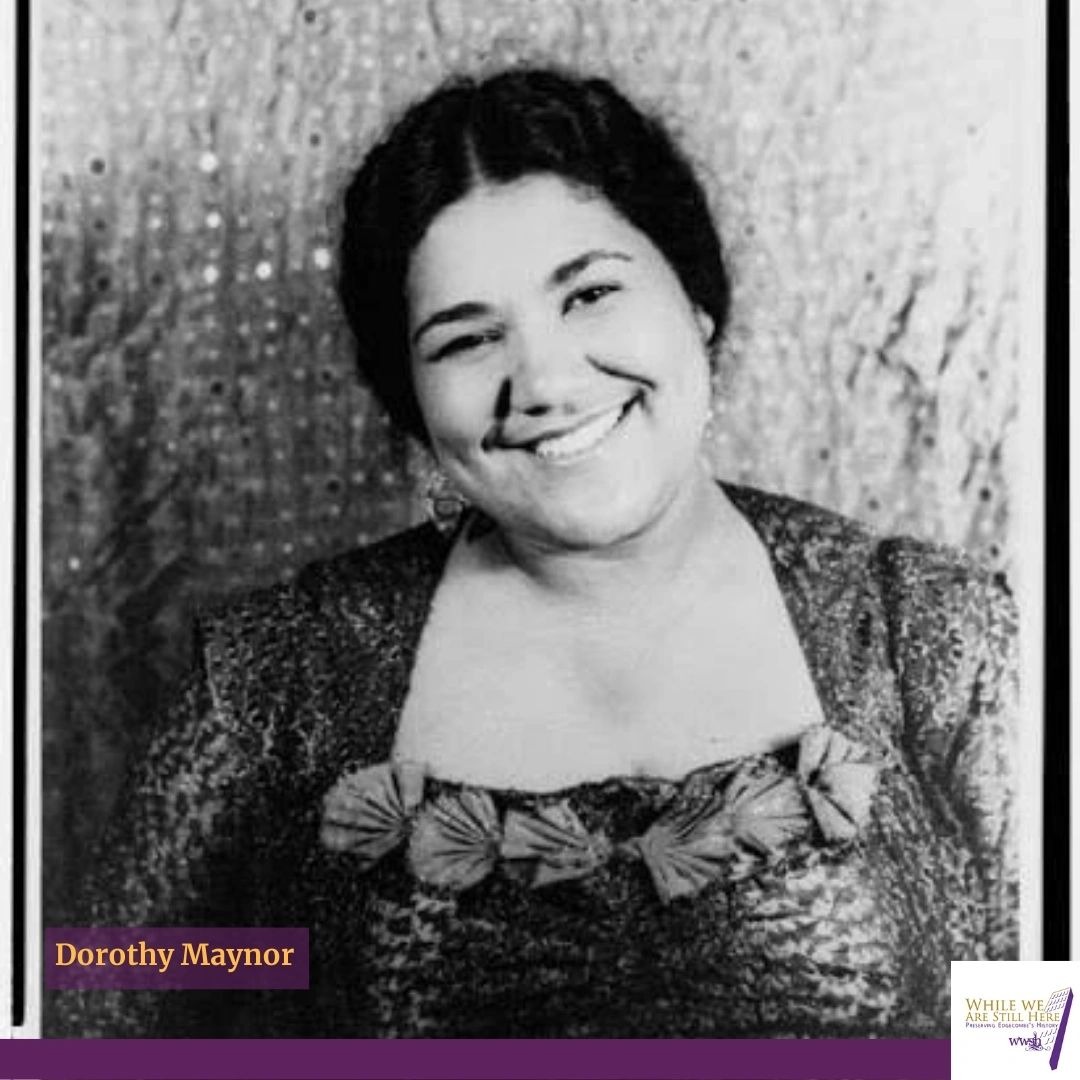
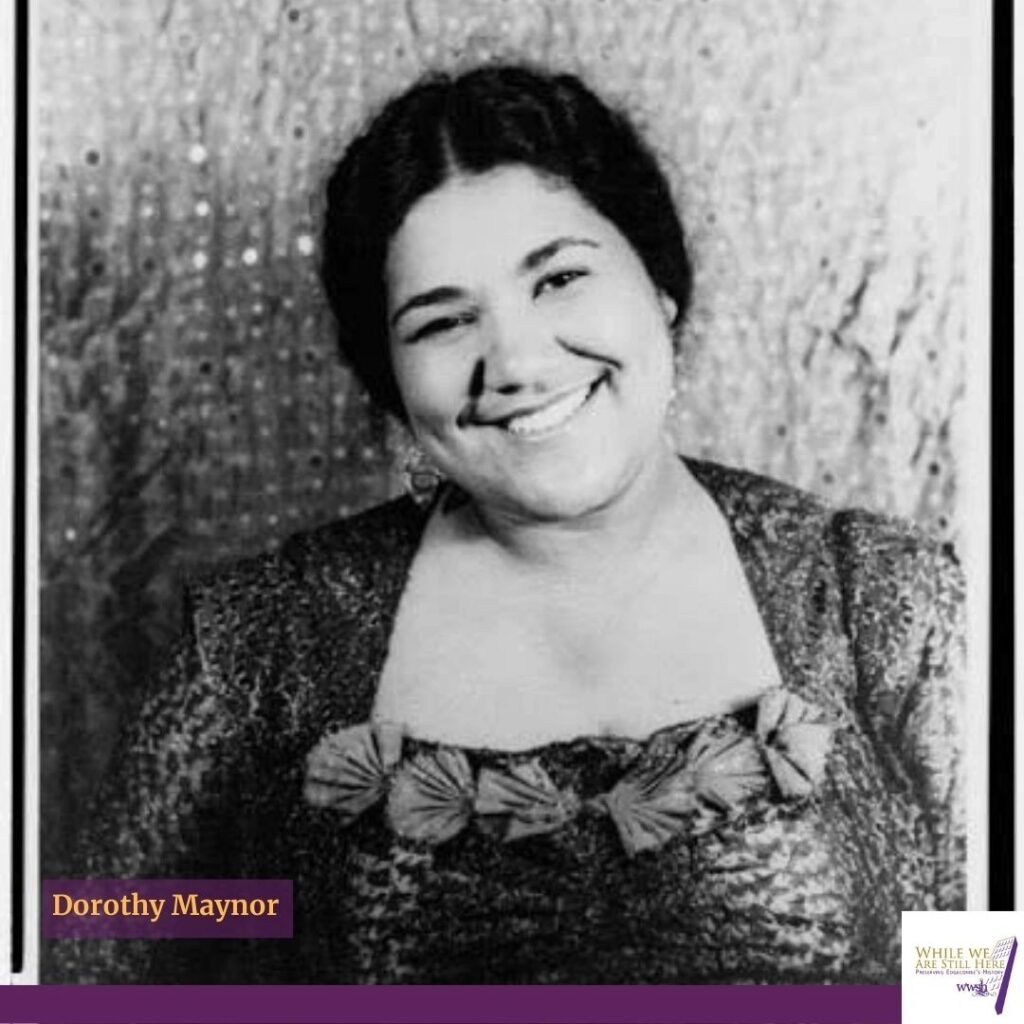
We, the board members of While We Are Still Here (WWSH)—a Harlem-based, nonprofit dedicated to the preservation of the rich cultural history of Harlem—write to express our concern about the apparent exclusion of Dorothy Maynor from the exterior of the Harlem School of the Arts (HSA), which she founded in 1964 and led, as its executive director, until 1979. As long-term residents and active members of the Harlem community, While We Are Still Here’s board of directors are steeped in Harlem’s history. Also, some of us have worked at HSA, sent our children there, or attended classes there.
We read the New York Times’s recent article, “With Help From Herb Alpert, Letting the Light In at the Harlem School of the Arts” (November 8, 2020) with great interest. While the article highlights the work that the Herb Alpert Foundation has done to infuse HSA with renewed life, we are concerned that there is no visible exterior acknowledgment or reference to its founder Dorothy Maynor.
Additionally, we, as women of color, want history to clearly reflect that when HSA experienced a catastrophic financial hardship in 2010, artist Mary J. Blige, along with the Herb Alpert Foundation, stepped in to assist this Harlem treasure keep its doors open to serve the community. Too often we find that history fails to acknowledge the work of African American women and their contributions to society, when, in fact, it is their work that has pushed forward, supported, and made possible many of the advances we see in society.
A member of WWSH’s leadership noticed the exclusion of Ms. Maynor from the façade of HSA while walking past the school, and, after several trips, wondered when an acknowledgment of its founder would be placed on the exterior of the edifice. That Ms. Maynor’s name is not visible is disrespectful and deeply offensive, given her contribution to the Harlem community, the arts, and to generations of students and artists who have come through the doors of the venerable Harlem institution. Dorothy Maynor’s contributions to Harlem are profound and should be acknowledged on the structure she created. Ms. Maynor’s love of community and her humanism compelled her to found HSA, so that the children of Harlem would have access to exceptional arts instruction.
Ms. Maynor was a member of Delta Sigma Theta Sorority, Inc., the largest existing African American Greek letter organization in the world, with more than 300,000 members. In discussing her legacy with Ms. Monique Jackson-Dickens, president of the New York Alumnae Chapter, we agree that it is an injustice for Ms. Maynor’s vision and contribution to be unrecognized on the exterior of the building. We recognize her vision and sacrifice to make the arts accessible for Harlem’s children.
Consider the impact of Margo Lee Shetterly’s subjects in her book, Hidden Figures, and its screen adaptation. A few African American women made space exploration possible for the United States and few knew of their work until recent years. Ms. Maynor is in danger of becoming another hidden figure.
In a letter dated May 27, 2019, we reached out to the Herb Alpert Foundation suggesting that Ms. Maynor’s name be placed alongside Herb Alpert’s, so that her name is visible, her vision is acknowledged, and her memory is sustained for posterity for all who pass the building. The failure to acknowledge Ms. Maynor in any obvious, physically visible form on the outside of the structure relegates her and her contribution to the proverbial back door. Untold numbers of African Americans in Jim Crow America had to walk through the back doors of the American South (and North). As a professional opera singer, Ms. Maynor was also forced to use the back door, undoubtedly suffering the indignities imposed by segregation, which was enforced by absolute depravity and terror. However, Ms. Maynor rose above society’s pathologies: Through sheer will and focus, assisted by her husband, Reverend Shelby Rooks, she founded the Harlem School of the Arts, which we strongly believe must preserve her legacy in a visible form. Yet, it appears by present actions, that death has not freed her from inequitable treatment, because even in death her cultural and financial largesse and grand accomplishments are obscured by this omission. The situation at HSA is not merely an issue of a donor paying for a naming opportunity. This is an issue of how history will be preserved, told, and understood in the future. Ms. Maynor’s legacy is one that is an inspiring testimony to the dynamism of Black agency.
Ms. Maynor had the financial savvy to retire the building’s mortgage in a year. Additionally, she sought the support of, and was highly respected by, her peers that included stars of European classical music, such as Vladimir Horowitz, Beverly Sills, Itzhak Perlman, and many others. If artists of that caliber held Ms. Maynor in such high regard, why is it that, in her death, she is being relegated to second-class status, while the world heaps praise on the Herb Alpert Foundation? We do not deny that the foundation’s philanthropic efforts deserve recognition. However, as it appears now, the acknowledgment of Dorothy Maynor’s vision and contribution are slowly being erased from public knowledge, and are in danger of being lost at the very institution she created for community children and aspiring artists. Recently, as a society, we have considered how site names and monuments can distort reality. For instance, the recent debates about the preservation of Confederate monuments give the impression that the insurrectionists won the Civil War, which we know was not the case. In this current climate, it is even more egregious that Ms. Maynor’s name is nowhere on the building’s façade.
Mr. Alpert, we know that you have a big sound and a big heart. Ms. Maynor also had a big sound and a big heart. She planted the seeds and made it possible for young artists to find their voices and develop their talents.
Light entering the “Gathering Space” is one thing, but why does that mean that Ms. Maynor is being left at the back door?
Signed,
June Benjamin, United Auto Workers
Yvonne Dennis, NITCHEN/Children’s Cultural Center of Native America
Deidre B. Flowers, City University of New York at Queens College
Stephanie Renee Payne, University of Southern California
Vera Sims, New York City Department of Education (retired)
Paulette J. Tabb, New York City Department of Education (retired)
Karen D. Taylor, While We Are Still Here
While We Are Still Here is a Harlem-based 501c3 organization, whose mission is to “educate, enshrine and preserve the extraordinary legacy of Harlem as an influential incubator that was vital to the intellectual, cultural, social, and political advancements of the Harlem community as well as the African Diaspora.”